Updated on September 19, 2026
These FAQs cover a range of topics relevant to our community. These will be updated as the situation evolves.
For KAUST’s residential community, where home, work, education, and daily life are closely connected, continuing normal indoor activities on campus may remain a safe and practical response.
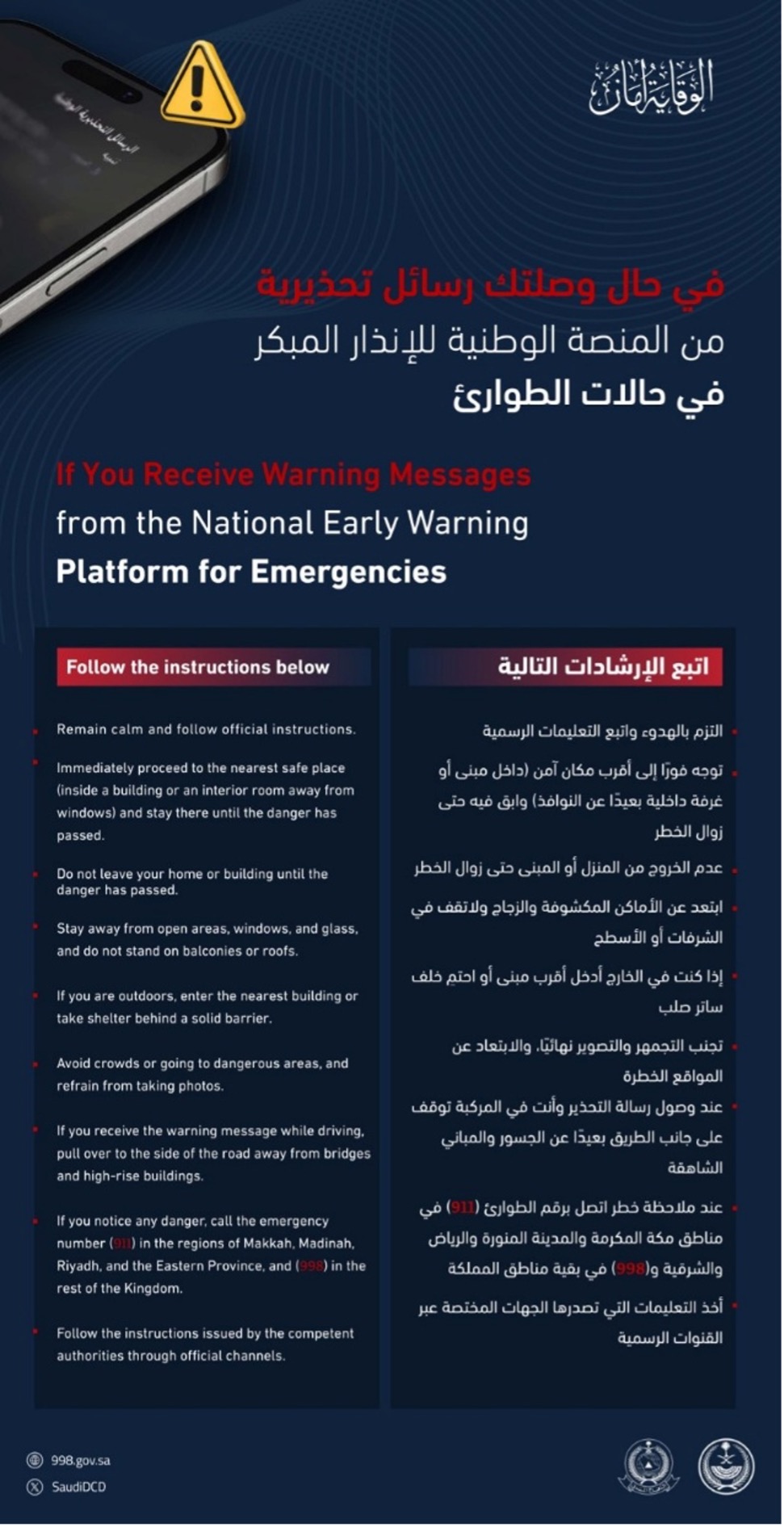
Shelter-in-place is used when it is safer to remain indoors than to evacuate, such as during an external hazard or when directed by Civil Defense, KAUST, or another authorized emergency responder. If escalation occurs, stay home if you are already there; your home is your shelter.
If you are instructed to shelter-in-place, follow these steps:
- If outdoors, move inside: Enter the nearest suitable building calmly and promptly. Do not cross open areas to return home, to your usual workplace, or to another preferred location if a nearer building provides safe shelter.
- Stay inside: Remain in the building you are in. Do not leave, drive, or move between buildings unless specifically directed by KAUST or emergency responders.
- Move away from exposure: Go to an interior area away from windows, exterior doors, glass, and exterior walls where practical. Close doors and windows, and switch off ventilation or air-conditioning if you can safely do so.
- Keep others together and account for them: Check that family members, visitors, colleagues, or others in your care are safely indoors. Assist anyone who may need additional support, as conditions allow.
- Stay informed: Monitor KAUST Alerts, email, and other official KAUST communication channels for updates.
- Wait for the official all-clear: Do not leave, drive, or resume normal movement until KAUST or authorized emergency responders issue an official all-clear. Do not act on informal messages, social-media posts, or assumptions that the incident has ended.
Act immediately and read the full alert. If you are outdoors, calmly enter the nearest suitable building; do not cross open areas or drive home when safe shelter is closer. If you are indoors, remain in the building and move to the best available interior location away from exterior windows, glass doors, exterior walls, and outside-facing entrances.
Close doors and windows and follow any specific instructions about ventilation. Monitor KAUST Alerts, email, and emergency.kaust.edu.sa, and remain sheltered until an official all-clear or evacuation instruction is issued.
You do not need to find a perfect windowless room or leave your building. Move to the best available location within the building, for example, an interior corridor, internal meeting room, enclosed office, or central core area—with the greatest practical distance from exterior glass and outside-facing walls.
If no windowless space is available, move as far from the windows as practical, stay out of the direct line of the glass, and place an interior wall or other substantial barrier between you and the exterior where possible. Do not approach windows to look outside, photograph, or record the incident; broken glazing and flying glass can create additional danger.
Not during normal operations. Once shelter-in-place is announced, remain in the same building but relocate from an exposed workspace to the best available interior area. Do not go outdoors searching for another building or travel home unless KAUST, Civil Defense, or an authorized responder directs you to do so.
Follow the Civil Defense instruction immediately; do not wait for a second alert from KAUST. Shelter first, then monitor KAUST Alerts, email, and emergency.kaust.edu.sa for campus-specific updates and further instructions.
No. Do not drive, walk across open areas, or move between buildings during shelter-in-place unless officially directed. Enter or remain in the nearest suitable building, keep the people already with you together, and rely on schools, workplaces, childcare facilities, and other campus services to implement their shelter procedures.
Follow the instructions in the alert. For an outdoor smoke, chemical, radiological, or air-quality hazard, you may be told to close exterior doors and windows and switch off systems that draw in outside air, if you can do so safely and know how. Do not interfere with safety-critical ventilation or specialized systems, and do not leave shelter to locate central building controls.
Keep the class together and give calm, brief instructions. If the classroom is suitable, remain there and move students away from exterior windows, glass doors, exterior walls, and outside-facing entrances. If the room is highly exposed, move the class together to the nearest suitable interior area within the same building, provided the route is safe.
Take attendance or conduct a reasonable headcount. Report anyone missing, injured, distressed, or requiring urgent assistance through the designated school or university channel, and support people with mobility, medical, sensory, communication, or other needs. Do not leave the sheltered area to search for someone or enter an unsafe location.
Continue a calm indoor activity where appropriate, monitor official KAUST communications, and keep the class together until an official all-clear or another protective-action instruction is issued. Shelter-in-place does not automatically require silence, concealment, lights off, or barricading unless a lockdown is separately announced.
If you are in class, remain with the group and follow the teacher’s, lecturer’s, or responder’s instructions. Move away from exterior windows and glass, do not leave to return home or check on family members, and do not move between classrooms or buildings unless officially directed.
If you are in a corridor, common area, or outdoors between classes, enter the nearest suitable indoor space and follow the instructions of staff in that location; do not cross an outdoor area to reach your usual classroom. Tell a staff member if someone is missing, injured, unwell, distressed, or needs additional assistance. Keep your phone available for official alerts, avoid sharing unverified information, and remain sheltered even if the normal class period ends.
Passengers and children: Remain calm, stay seated while the bus is moving, keep aisles clear, and follow the driver’s or bus supervisor’s instructions. Do not ask to be dropped off, leave the bus independently, or attempt to walk home or to school. Adults should help keep children calm and assist passengers who need support when directed.
Drivers and bus supervisors: When safe, contact or monitor KAUST Transportation dispatch and follow directions from KAUST Security, Civil Defense, or emergency responders. Do not make unscheduled drop-offs or independently continue toward an area that may be exposed. Account for passengers and report anyone missing, injured, unwell, distressed, or requiring assistance.
If directed and the route is safe, proceed to the nearest designated or suitable building and move passengers inside as a supervised group. If reaching a building is unsafe or authorities direct the bus to remain in place, park safely, close doors and windows, and follow hazard-specific instructions regarding ventilation or air-conditioning; passengers should remain seated until directed otherwise. A permanent building generally provides better shelter than a vehicle during an airborne hazardous-material release.
Remain sheltered until KAUST, Civil Defense, or an authorized emergency responder issues an official all-clear or directs you to evacuate. Do not leave because the area appears calm, an alert tone stops, a normal class or work period ends, or an informal message or social-media post says the incident is over.
Shelter-in-place does not require remaining in a location threatened by fire, smoke, structural damage, a medical emergency, or another immediate internal danger. Move away from the immediate danger, follow fire alarms and responder or driver instructions, and use the safest available route; once safe, continue following official directions for the wider incident.
- Read the alert. Follow the complete Civil Defense or KAUST instruction.
- Get inside. Use the nearest suitable building; do not travel home.
- Move away. Increase your distance from windows, exterior glass, doors, and outside walls.
- Stay together. Account for those with you and assist anyone who needs support.
- Stay informed. Monitor KAUST Alerts, email, and emergency.kaust.edu.sa.
- Wait. Do not leave until an official all-clear or evacuation instruction is issued.
Travel, Leave & Work Arrangements
The guidance below outlines arrangements for employees who are currently travelling or planning to travel, and what to expect should circumstances change.
Employee Business Travel
Employee Personal & Annual Leave
Employees Outside the Kingdom
Student Business Travel
Student Personal & Annual Leave
Employee and Student Iqama & Exit/Re-Entry Visas
Staying Informed
We understand that many of you may be feeling concerned, and we recognize that the vast amount of information being broadcast and shared can make it difficult to maintain perspective. We would encourage you to seek information only from official and verified sources, including Saudi government announcements, your own government's travel advisories, and official KAUST communications. Unverified reports and informal messaging should not be treated as guidance.
How to Seek Support
Student Support
Community, Employee and Student Support
If you need assistance with travel disruption, logistics, or HR matters, please contact the relevant team:
HR Helpdesk: hrhelpdesk@kaust.edu.sa
HR Phone: +966 (0) 12 808 2055
HR 4/7 Mobile: +966 54 470 0277
Travel Office: +966 (0) 12 808 5444
Wellbeing (Lyra): KAUST code: KAUSTXLYRA
Government Affairs Emergency Number: 24/7 hotline at +966 54 470 1111